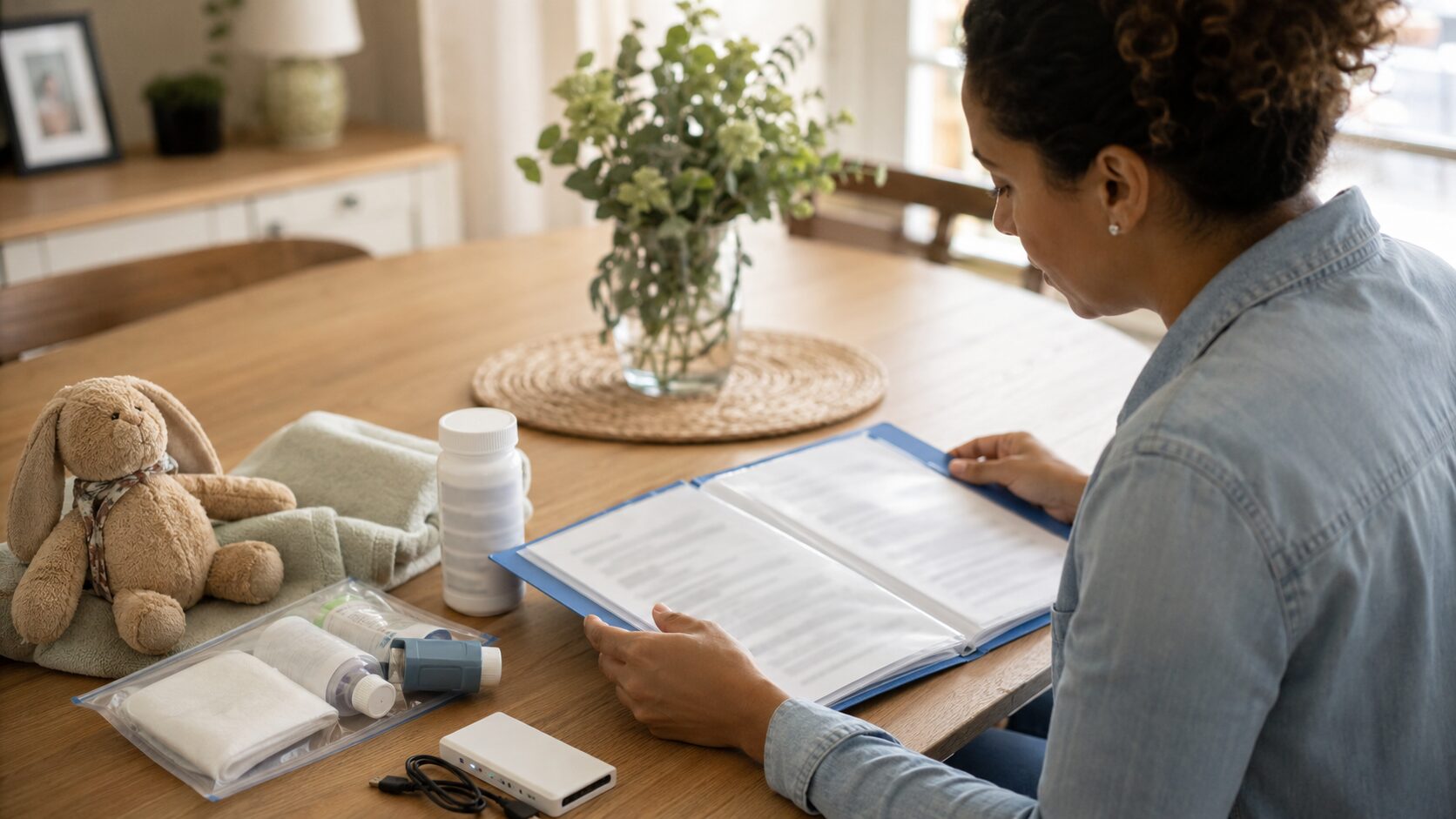
Children with special healthcare needs may depend on medication, electricity, specialized equipment, accessible transportation, communication supports, strict food preparation, or caregivers trained in specific procedures. An ordinary contact list is not enough.
The CDC recommends creating an emergency care plan and emergency medical kit with the child’s healthcare provider. The plan should reflect the individual child rather than a generic diagnosis.
Organize your child’s care information in a private family plan
Build the plan with the clinical team
Ask the child’s pediatrician and relevant specialists to review the plan. Depending on the child’s needs, include the pharmacist, school nurse, therapists, home-health team, equipment supplier, insurer, and local emergency services.
Confirm:
- Diagnoses and baseline condition
- Allergies and previous severe reactions
- Medication names, doses, timing, purpose, and storage
- Signs that require urgent help
- Procedures a trained caregiver may perform
- Procedures that require a clinician or emergency responder
- Preferred hospital and specialist contacts
- Insurance and pharmacy information
- The date the care plan was reviewed
Do not ask a caregiver to rely on memory or interpret unclear instructions during a crisis.
Prepare medication and medical supplies
Ask the prescriber and pharmacist how much medication to keep, how to rotate it before expiration, and how to maintain required temperatures. Insurance rules, controlled-substance rules, supply availability, and storage needs can affect what is possible.
The CDC’s emergency medical-kit checklist recommends discussing an emergency medication supply with the child’s doctor and asking the pharmacist about shelf life and storage. It also recommends current prescription information and copies of the care plan in both paper and offline electronic forms.
Include condition-specific supplies such as syringes, tubing, dressings, feeding supplies, testing materials, communication batteries, or other items identified by the clinical team.
Plan for power-dependent equipment
If equipment requires electricity, document:
- Battery type and expected operating time
- Safe charging methods
- Backup battery or manual alternative
- Equipment supplier and after-hours number
- Generator safety and approved connection instructions
- Nearby locations that may support the equipment
- What to do when power will be unavailable longer than the backup capacity
Never operate a fuel-powered generator indoors or in an enclosed space. Discuss safe backup power with qualified professionals and the equipment supplier.
Contact local emergency management or emergency medical services to ask what voluntary programs, shelter capabilities, transportation, or planning resources exist. Do not assume every shelter can support pediatric equipment or medication storage.
Plan accessible transportation
Identify how the child, equipment, medication, food, mobility aids, and caregiver will travel together. Consider the caregiver’s vehicle, tie-down or seating requirements, lifting needs, portable equipment, and evacuation routes.
Keep the plan realistic. A person who cannot safely transport the child and equipment should not be the only emergency caregiver.
Use the guide to choosing an emergency caregiver to evaluate both willingness and practical ability.
Prepare communication and sensory supports
Document how the child communicates pain, fear, hunger, breathing difficulty, medication needs, and yes or no. Include communication devices, picture boards, interpreter needs, hearing or vision supports, and a short description of the child’s usual behavior.
Also record:
- Triggers and calming strategies
- Comfort objects
- Safe ways to explain an emergency
- Wandering or elopement risk
- Sensory needs involving noise, light, touch, or crowds
- Important behavioral or mental-health supports
Practice the plan at the child’s level of understanding. CDC guidance notes that practice can help children stay safe and feel calmer during emergencies.
Address food and temperature needs
List special formulas, feeding supplies, texture restrictions, allergies, refrigeration, preparation water, and safe alternatives. Plan how refrigerated medicine or food will remain within a safe temperature range during travel or a power outage.
Ask the child’s clinical team for instructions tailored to the treatment or feeding plan. Do not substitute general emergency advice for condition-specific medical guidance.
Give caregivers layered information
Every caregiver should receive the immediate information needed for safe care, but the primary emergency caregiver may require more:
- Current care plan
- Medication schedule
- Equipment instructions
- Provider and supplier contacts
- Insurance information
- School and therapy schedule
- Consent or authorization documents recognized where you live
- A list of supplies traveling with the child
- Home and transportation instructions
The emergency-caregiver information guide helps organize the handoff. Train caregivers in advance through the child’s providers when specialized procedures are involved.
Coordinate with school and childcare
Ask the school nurse or program administrator to compare your family plan with the school’s emergency procedures. Confirm medication storage, evacuation, accessible transportation, communication, reunification, and who is authorized to collect the child.
Keep home and school plans consistent, but follow the facility’s required forms and clinical orders.
Keep the plan portable and current
Maintain a waterproof paper copy and an offline digital copy. Include the review date. CDC recommends regularly updating medical records and checking supplies and expiration dates.
Review after any medication, equipment, diagnosis, provider, school, insurance, caregiver, or transportation change. Conduct a full review with the healthcare team at least annually, or more often when the child’s condition requires it.
Frequently asked questions
Who should help create my child’s emergency medical plan?
Involve the child’s healthcare provider and, when relevant, specialists, pharmacist, school nurse, therapists, equipment suppliers, local emergency services, and the caregivers expected to use the plan.
How much medication should I keep for emergencies?
Ask the child’s prescriber and pharmacist. Supply limits, insurance rules, storage requirements, expiration dates, and the child’s condition all affect what is appropriate.
What if my child’s equipment requires electricity?
Identify battery options, safe charging methods, power-outage procedures, equipment suppliers, accessible transportation, and locations that can support the equipment. Discuss the plan with the child’s clinical team and local emergency services.
Related guides
- How to Choose an Emergency Caregiver
- Emergency Information for Babysitters and Caregivers
- How to Create a Family Emergency Binder
Sources
- CDC, Children and Youth With Special Healthcare Needs in Emergencies
- CDC, Emergency Medical Kit Checklist
- American Academy of Pediatrics, Allergy and Anaphylaxis Emergency Plan
- Ready.gov, Build a Kit
Turn guidance into a plan
Give the people you trust clear information.
Create your private, printable Family Readiness Plan. No account or payment is required.
Build my free plan